


The Silence Machine Is Breaking — Don’t Let Them Put It Back Together
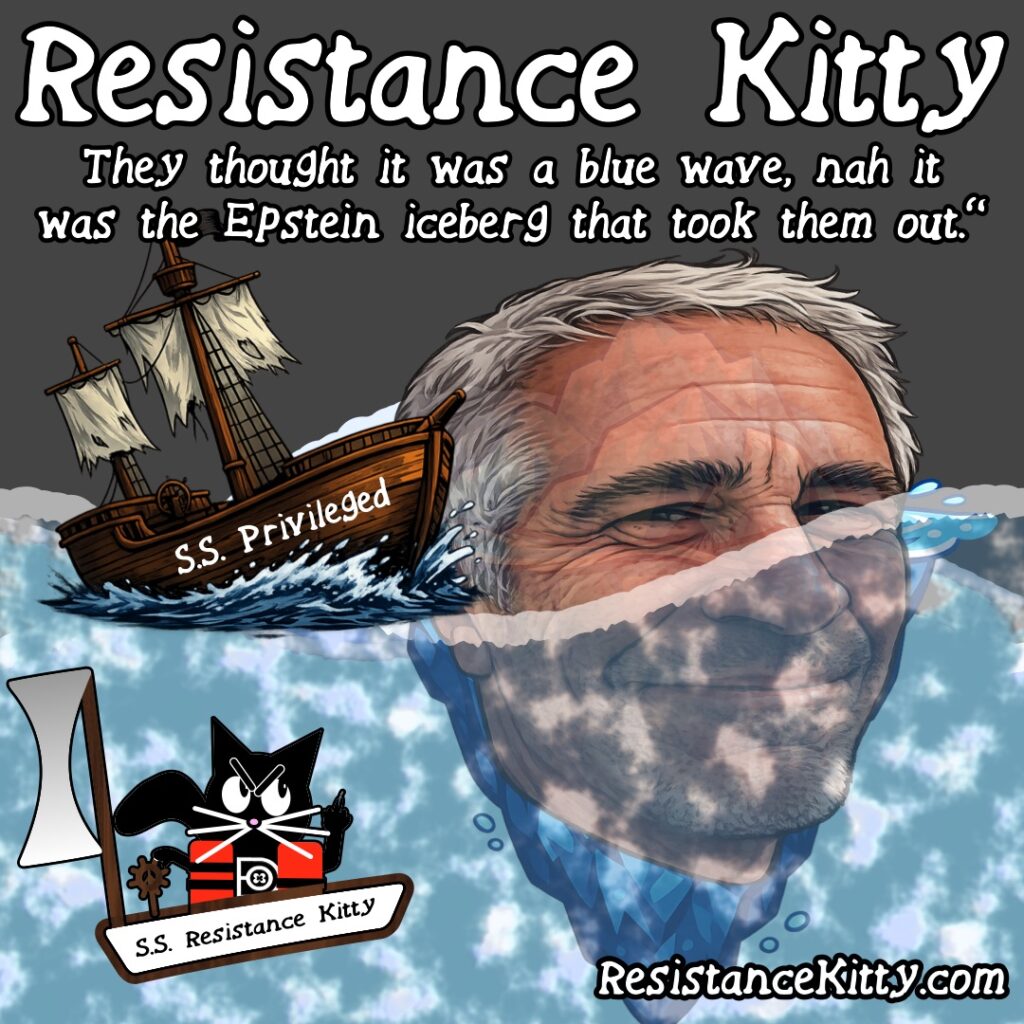
Every scandal involving power follows the same script: shock, denial, distraction, and then a quiet hope the public gets tired. That’s exactly what is happening right now. The growing fallout from the Epstein revelations isn’t just about one predator — it’s about a system that protected reputations over children and connections over justice. The moment attention fades is the moment accountability disappears. That’s why this is not a spectator event. This is a participation moment.
Ukraine v Russia
The SpyTalk report examines the killing of a senior Russian military figure and the uncertainty around who carried it out, with analysts suggesting it reflects the increasingly covert nature of modern conflict tied to the war in Ukraine. Intelligence observers view the incident less as an isolated attack and more as part of a broader pattern of deniable operations, counter-intelligence activity, and retaliation occurring beyond traditional battlefields. The significance isn’t just the individual target — it shows how geopolitical conflict is moving into clandestine actions, intelligence services, and proxy activity across borders. In practical terms, the war is no longer confined to front lines; it is spilling into covert operations, political pressure, and security concerns that affect international stability.
Department of Lack of Intelligence
Intelligence World Jitters: Security Concerns and Political Chaos Collide
The SpyTalk “SpyWeek” roundup discusses growing unease inside national security and intelligence circles as political controversies and personnel turmoil increasingly intersect with foreign policy and classified information handling. The piece suggests intelligence professionals are worried less about a single incident and more about a pattern — politicization of security institutions, public messaging that undercuts agencies, and officials with unconventional foreign policy views influencing sensitive decisions. The broader implication is that instability at the political level can ripple directly into intelligence operations, potentially affecting alliances, information-sharing, and counter-espionage efforts. In short, national security officials are watching domestic political conflict not as a media story, but as an operational risk.
Department of War Crimes
Trump Foreign Policy: Allies Alarmed, Strongmen Encouraged
The Zeteo analysis argues that a second Trump-era foreign policy is already reshaping global behavior, with allies uncertain about U.S. commitments and authoritarian leaders testing boundaries. The piece describes a shift away from traditional alliances and cooperative diplomacy toward transactional relationships, where support depends on personal relationships and leverage rather than institutions. Analysts warn this kind of unpredictability weakens deterrence, emboldens adversarial governments, and creates openings for influence operations and corruption networks to operate across borders. In practical terms, the article frames U.S. instability not as a domestic political issue but as an international security issue — because when American policy becomes inconsistent, other governments and powerful actors adjust their behavior accordingly.
Guardians of Pedophilia (GOP)
Europe Reacts, America Hesitates: Epstein Fallout Hits Overseas First
The Politico reporting examines how the release of Epstein-related records has triggered far stronger consequences in Europe than in the United States. Across multiple European countries, officials, diplomats, and public figures have faced investigations, resignations, or public censure simply for maintaining relationships with Epstein after his earlier conviction, while comparable repercussions in the U.S. have been slower and more limited. The key point is accountability culture: parliamentary systems, media pressure, and political norms abroad are producing faster institutional responses, whereas in the U.S. the scandal remains more politically contested and fragmented. The broader takeaway is that the story is no longer just a criminal case — it has become an international governance issue, revealing how different countries respond when powerful networks intersect with politics, finance, and reputation.
American Gestapo
Government Eyes Online Spaces: DHS Monitoring Reddit Communities
The report describes how the Department of Homeland Security has been monitoring activity on Reddit as part of its efforts to track potential threats and online radicalization trends. Rather than targeting ordinary users individually, the monitoring focuses on public forums where extremist rhetoric, organizing behavior, or emerging movements can be identified early. The controversy centers on the boundary between public-safety intelligence gathering and civil liberties — critics warn that broad surveillance of online discussion spaces risks chilling lawful speech, while supporters argue agencies are reacting to real incidents where online communities became organizing hubs. The larger implication is that digital spaces once seen as informal conversation platforms are now treated by authorities as operational environments, meaning internet activity increasingly intersects with national security and investigative attention.
Cheeto Von Taco Schitzenpantz
Crowdsourced Investigation: Journalists Ask the Public to Map the Power Network
The BuzzFeed News project invites readers to help identify connections inside “Trumpworld,” asking the public to submit information, relationships, and documented interactions among political figures, donors, operatives, and affiliated organizations. Rather than a traditional investigation run only by reporters, it reflects a newer model of open-source journalism where large networks of people help assemble relationship maps using public records, reporting, and documented contacts. The significance isn’t just the specific names — it shows how modern investigations increasingly rely on distributed research communities to trace influence, money, and access patterns that are too large for a single newsroom to track alone. The broader implication is that accountability reporting is shifting: instead of a single exposé, complex power networks are now uncovered through collaborative documentation over time.
Epstein Trump Pedo”files”
Olympics Fallout: Another Elite Figure Linked to the Epstein Orbit Steps Down
Casey Wasserman, a major entertainment executive and head of the Los Angeles 2028 Olympic organizing committee, resigned following renewed scrutiny over past associations with Ghislaine Maxwell. Reporting focuses not on criminal allegations but on reputational and institutional risk — organizations connected to global events and public trust are distancing themselves from anyone tied to the Epstein network as investigations and public attention intensify. The resignation reflects a broader pattern: consequences tied to the scandal are now occurring years later as new testimony, documents, and oversight inquiries bring old relationships back into focus. The takeaway is that the case is no longer confined to courts; it is affecting leadership positions, public institutions, and international organizations as accountability pressures expand.
Raised Above Consequences: What Extreme Wealth Can Do to a Human Mind
The article explores how extreme wealth — especially being raised in it — can distort normal psychological development. It argues that when children grow up surrounded by constant deference, insulation from consequences, and outsourced caregiving, they may struggle to develop empathy, boundaries, and accountability. Billionaires and their families often exist in environments where rules are negotiable, problems are solved by staff or lawyers, and social feedback is filtered, which can reinforce entitlement and a belief that normal limitations do not apply to them. The broader takeaway is not that wealth itself creates criminal behavior, but that extreme power and insulation can weaken social restraints and risk perception, helping explain why certain elites may ignore warning signs, rationalize harmful behavior, or assume they will never face consequences.
The Story Isn’t Slowing Down — The Epstein Fallout Is Accelerating
Today’s roundup highlights how the Epstein case continues to expand rather than fade, with new reporting, testimony, and international attention keeping the scandal active. Instead of remaining a closed criminal prosecution, the issue now spans congressional oversight, survivor accounts, media investigations, and global scrutiny. The key shift is momentum: developments are no longer limited to court filings but include political inquiry, cultural reaction, and new documentation emerging over time. The broader takeaway is that the Epstein case has entered a second phase — not focused on proving the crimes themselves, but on uncovering how the system around him functioned and why so many warning signs failed to produce accountability.
The Resistance
ICE Messaging Memo: Pollsters Beg Politicians to Stop Sounding Cruel on Immigration
A new Navigator Research memo isn’t about policy — it’s about optics. After testing voter reactions, researchers found the public reacts strongly against harsh, punitive language around immigration and deportations, especially messaging that appears to target families, longtime residents, or non-violent migrants. Voters across multiple groups responded better to language focused on safety, legality, and basic fairness, while aggressive rhetoric and mass-deportation framing consistently pushed moderates and independents away.
In plain English: the political fight over immigration isn’t just about what the government does, it’s about how it talks about it — and the research shows voters are increasingly uncomfortable with enforcement messaging that sounds like collective punishment rather than law enforcement.
Map Games Continue: Redistricting Fight Expands in Maryland and Virginia
The analysis looks at new redistricting battles emerging in Maryland and Virginia, where political leaders and courts are once again disputing how congressional districts are drawn. The fight centers on partisan gerrymandering — drawing maps that advantage one party — and whether courts or legislatures should control the process. The piece explains that district lines directly shape who can realistically win office, meaning these map disputes are effectively fights over political power itself. In practical terms, redistricting determines representation years before voters ever cast ballots, so legal challenges and map revisions now could decide future control of Congress more than any single campaign.
How Groups Learn to Obey: The Psychology Behind Cult-Like Loyalty
The article discusses how cult mentality forms and why intelligent people can become deeply loyal to harmful leaders or systems. It explains that coercive groups don’t rely mainly on force — they rely on psychological conditioning: isolation, belonging, identity reinforcement, fear of exclusion, and gradual normalization of behavior that would once have felt unacceptable. Members are rewarded for loyalty, discouraged from questioning, and taught that outsiders are dangerous or untrustworthy. Over time, the individual’s sense of self becomes tied to the group, making leaving emotionally and psychologically difficult even when harm becomes obvious. The broader implication is that abusive environments often persist not because participants are irrational, but because social pressure, dependency, and identity attachment can override critical thinking and keep people silent or compliant.
They’re Saying the Quiet Part: Extremism Is Organizing in the Open
The article warns about online spaces and activist rhetoric escalating into more absolutist, “us-versus-them” framing, where political opponents are no longer treated as fellow citizens but as enemies to defeat. It describes how highly charged messaging, constant crisis language, and echo-chamber communities can intensify fear and urgency, encouraging people to justify extreme positions or actions because they believe normal systems no longer function. The broader takeaway is about radicalization dynamics: when political identity becomes moral identity, compromise starts to feel like betrayal and participants become more willing to support drastic measures. The piece frames this not just as a political disagreement but as a social stability issue — heated rhetoric can move people from engagement into escalation.
What We Are Watching Today
- Rep. Comer Says Ghislaine Maxwell Refused to Answer Questions During Deposition Live
- Vice President Vance and Armenian PM Pashinyan Hold Joint News Conference Live
- Religious Liberty Commission Holds Hearing on Antisemitism Live
- Senate Session
- House Session, Part 2
Featured Resisters
- European Alternatives
- ICE Activity Tracker – Community Safety Alert System
- MPLS Mutual Aid – Twin Cities Community Support & Resource Hub
Today’s Call to Action
- Attend A Nationwide Event
- Call your lawmakers
- Read Today’s Resistance Survival Guide: RSG #197 How to Archive Web Pages and Social Media Posts So They Hold Up as Evidence
- Send and Share These Pre Written Letters
- Sign and Share These Petitions
They are waiting for exhaustion. They are waiting for people to decide it’s “too complicated” or “too dark” and move on. Don’t. Keep calling elected officials. Demand records remain public. Support survivor advocates and investigative journalists. Share sourced information and refuse the distraction cycle. Scandals die in silence — and right now, silence is the only thing protecting what’s left of that network.