


Authoritarian on the Loose: What Broke Today, Who Did It, and What We Do Next
Another day, another authoritarian tantrum dressed up as “policy.” While the headlines blur together, the damage does not. Today’s political landscape is being reshaped in real time by power grabs, court fights, and coordinated attempts to normalize cruelty and silence accountability. This blog cuts through the noise to flag what actually matters, explain why it’s dangerous, and—most importantly—lay out clear actions you can take today to push back. Staying informed is resistance. Acting on it is survival.
America’s Gestapo
As Trump Administration Readies Possible Military Action in Minnesota, Analyst Warns of Escalation
Journalist Seth Abramson outlines what he describes as mounting evidence that the federal government is preparing to use military force in Minnesota amid unrest tied to immigration enforcement — characterizing the situation as a dramatic escalation in federal-state tensions. Federal orders have placed about 1,500 active-duty soldiers on prepare-to-deploy status to the region amid talk of invoking the Insurrection Act if state and local authorities are deemed unwilling or unable to restore order.
Abramson’s report claims this development marks a significant inflection point and raises questions about the Trump administration’s approach to domestic dissent, legal oversight, and use of the military for internal security. The details of any actual deployment remain fluid, and official statements frame the troop posture as precautionary rather than a finalized action.
Health & Human Containment Services
Trump USDA Accused of Hiding SNAP Data and Curtailing Food Security Reporting
The U.S. Department of Agriculture under President Trump and Agriculture Secretary Brooke Rollins has taken controversial steps affecting food security data and nutrition support programs. According to reporting by Mother Jones, the USDA terminated its annual Food Insecurity Survey and reduced transparency around food stamp (SNAP) cuts, limiting public insight into rising hunger amid high food costs and a practice that has alarmed advocates for low-income families. Critics say the move obscures how millions of Americans are faring and comes alongside broader efforts to tighten SNAP eligibility and reporting requirements. Meanwhile, states and civil rights groups are pushing back, arguing that SNAP cuts and data rollbacks risk deepening food insecurity among vulnerable populations.
Rollins has defended USDA policies, including promoting new dietary guidelines and claiming healthy meals can be affordable — a suggestion widely mocked as out of touch given persistent inflation in grocery prices.
Department of Injustice
Justice Department Under Trump Considers Major Rollback of Federal Gun Regulations
The U.S. Justice Department, under Attorney General Pam Bondi and the Biden-era successor Trump administration, is weighing a broad rollback of federal gun rules enforced by the Bureau of Alcohol, Tobacco, Firearms and Explosives (ATF). Plans under discussion include easing restrictions on private gun sales, loosening firearm shipping regulations, expanding what types of guns can be imported, and altering the federal gun-purchase form to require listing biological sex at birth — a change that could raise legal concerns for transgender buyers. Officials are also considering refunding certain federal licensing fees tied to gun sellers.
These regulatory shifts are part of a broader push to satisfy vocal Second Amendment advocacy groups and Trump’s political base, though they have raised alarms among gun-violence prevention advocates and some law enforcement officials who warn that weakening ATF oversight could undermine public safety. Internal debates continue over how and when to make the changes public, with some officials worried about their impact on the confirmation of ATF leadership nominees.
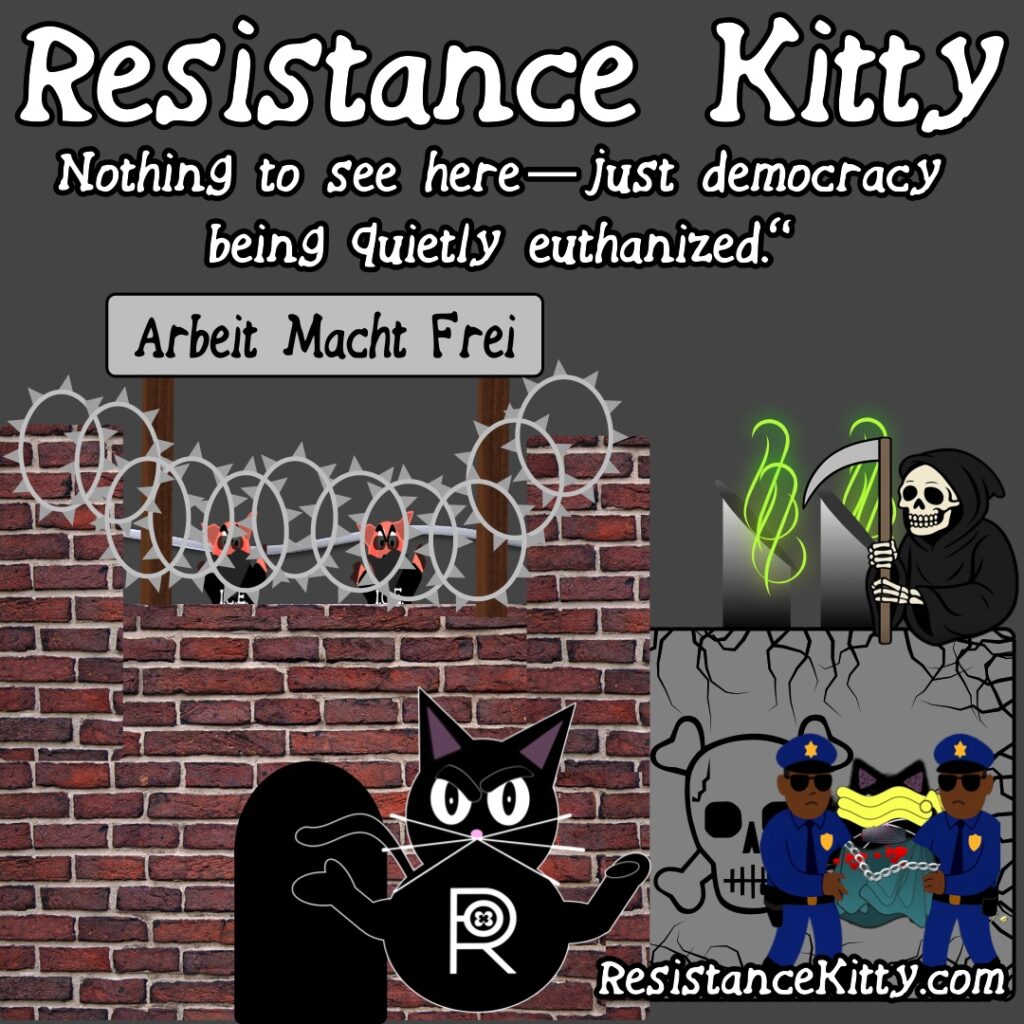
Kangaroo Court
Judge Declines to Block New DHS Policy Requiring Congress Members to Give Notice Before Visiting ICE Detention Facilities
A federal judge in Washington, D.C., refused to temporarily block a new Department of Homeland Security policy that forces members of Congress to provide seven days’ advance notice before visiting Immigration and Customs Enforcement (ICE) detention facilities — a significant hurdle to congressional oversight.
U.S. District Judge Jia Cobb ruled that plaintiff lawmakers used the wrong procedural approach, and that the Jan. 8 policy represents a new agency action not covered by her previous injunction against similar restrictions. She did not decide whether the policy itself is lawful.
The updated rule was issued shortly after three Democratic members were initially denied access to an ICE facility in Minneapolis, days after an ICE officer fatally shot a U.S. citizen — events that have heightened tensions over transparency and accountability in immigration enforcement.
Critics argue the notice requirement undermines congressional oversight and violates federal law that bars the use of appropriated funds to block lawmakers from unannounced facility visits. Plaintiffs are expected to pursue additional legal avenues to challenge the policy.
Federal Judge Compares Drag to Blackface, Upholds Campus Drag Ban in Texas
U.S. District Judge Matthew Kacsmaryk issued a controversial decision allowing West Texas A&M University to enforce a ban on drag performances on campus, concluding that drag shows do not convey a First Amendment message and equating them with blackface in his reasoning. In his ruling, the judge sided with the university’s claim that drag lacks protected expressive content, a justification that departs from established free-speech precedent and has drawn widespread criticism from civil liberties advocates. The decision will block the planned drag event by the campus LGBTQ+ student group unless overturned by a higher court.
Grab Your Popcorn
Global Backlash Escalates After Trump’s Greenland Threats
In reaction to President Trump’s public threats related to Greenland and proposed tariffs on allies, leaders from around the world have issued unusually blunt pushback. The European Union convened an emergency meeting of all 27 member states to coordinate a response, Canada warned it would defend itself militarily against any attempt to seize Greenland, and China urged the U.S. to abandon unilateral coercion in favor of diplomacy. Critics say these statements reflect widespread alarm at rhetoric that many see as destabilizing to international alliances and norms. The intense diplomatic backlash highlights how strained relations over territorial and trade disputes have become.
Epstein Trump Pedo”files”
Epstein Survivor Urges Judge to Appoint Independent Monitor as DOJ Misses File-Release Deadline
Lisa Phillips, a survivor of Jeffrey Epstein’s trafficking network, filed a court motion arguing she has “no confidence” that the Department of Justice under President Trump will comply with the Epstein Files Transparency Act’s statutory deadline for releasing all investigative records — a deadline already passed with only a small fraction of documents made public.
Phillips is backing a bid by Reps. Ro Khanna and Thomas Massie to have a federal judge appoint a special master or independent monitor to oversee the DOJ’s handling of the release, asserting that without judicial intervention, compliance with the law may continue to stall.
The broader effort to compel full disclosure — spurred by bipartisan pressure and survivors’ advocacy — has already forced procedural pushes in Congress and intensified scrutiny of how the DOJ and courts are managing millions of potentially responsive documents.
Cheeto von Schitzenpantz
Trump Commutes Sentence of GOP Congressman’s Son Who Was Serving 8 Years for Meth Distribution
President Trump commuted the federal prison sentence of James Phillip Womack, the son of Republican Rep. Steve Womack of Arkansas, who had been serving an 8-year sentence for distributing methamphetamine and possessing a firearm as a felon. Under the commutation issued on January 15, 2026, Womack’s prison term was ended early, though he is still required to serve five years of supervised release.
James Womack’s legal history includes multiple arrests and convictions dating back years, and the administration cited humanitarian considerations — including his struggles with addiction and family concerns — in granting clemency. The move has drawn public attention and debate, especially given the broader national focus on drug enforcement and criminal justice policy.
Trump Posts Map Showing U.S. Flag Over Canada and Greenland, Igniting International Reaction
President Trump shared a graphic on social media depicting the U.S. flag superimposed over Canada and Greenland, fueling speculation and controversy about his intentions toward the neighboring territories. The image drew criticism from Canadian and Danish officials — whose governments oversee Greenland — as well as from foreign policy experts who called it provocative and unhelpful to diplomatic relations. The post comes amid broader friction between the U.S. and its allies over territorial and trade issues, and it has become a flashpoint in ongoing debates about Trump’s approach to international norms and alliances. Coverage highlights concern that such imagery, even symbolic, can escalate tensions and complicate diplomatic engagement with close partners.
Trump Invites Putin to Join Gaza “Board of Peace,” Kremlin Says
Russian President **Vladimir Putin has received an invitation from U.S. President Donald Trump to join a newly proposed international “Board of Peace” intended to oversee Gaza ceasefire implementation and reconstruction, according to the Kremlin, which says Moscow is reviewing the offer and seeking clarification from Washington. The initiative, announced by Trump in mid-January as part of broader peace-plan efforts under UN Resolution 2803, would place Trump as chair and invite global leaders to participate in a body that could extend beyond Gaza to other conflicts — though many countries have been hesitant or critical of the idea. France, Canada, and other Western nations have expressed reservations or declined to join, and some critics worry the structure could undercut traditional U.N. mechanisms or legitimize leaders like Putin despite ongoing conflicts such as Russia’s war in Ukraine.
Annotated Breakdown of Trump’s Greenland Letter: Nobel Snub, Territorial Claims, and Global Fallout
An annotated version of President Trump’s controversial message to Norwegian Prime Minister Jonas Gahr Støre sheds new light on how the letter blends personal grievance with geopolitical demand. In the communication, Trump linked his failure to receive the Nobel Peace Prize to a shift in his priorities away from peace, and asserted that “the world is not secure unless we have complete and total control of Greenland,” a self-governing Danish territory. He criticized Denmark’s ability to defend the island and questioned legal claims to it, while also coupling the demand with threats of tariffs against allies unless terms are met. Norway and other NATO members have pushed back, emphasizing diplomatic channels and rejecting coercive language. Independent fact checks note that the Nobel Peace Prize is awarded by a committee, not by the Norwegian government. Trump’s stance and tactics have fueled diplomatic tensions across Europe and heightened debate about strategic priorities in the Arctic and alliance unity.
The Psychological Dynamic That Explains Trump’s Deference to Putin
In a recent piece from Jack Hopkins Now, the author argues that Donald Trump’s behavior toward Vladimir Putin isn’t best explained by fear or conspiracy—it’s about status psychology and dominance dynamics. According to the analysis, Trump’s identity is built on external validation and public dominance, whereas Putin embodies unconstrained power without the need for approval. This creates a psychological deference: Trump softens, hesitates, and interprets strongmen behavior as strength rather than threat because it aligns with his internal hierarchy of power. The article frames this not as ideological alignment but as a predictable pattern in dominance hierarchies that can have real geopolitical consequences, especially when democratic accountability mechanisms clash with personalities wired for validation and unconstrained authority.
Tariff King Trump vs. Europe’s “Blackmail Bazooka”: Trade War Threatens Allies Over Greenland
Donald Trump — self-styled “Tariff King” — is threatening 10 %–25 % tariffs on eight U.S. allies unless they agree to sell him Greenland, turning a geopolitical fantasy into an economic cudgel. In response, the European Union is dusting off its anti-coercion “big bazooka”, a powerful trade defense tool designed to counter economic blackmail, potentially targeting U.S. tech, aviation, and other imports if the tariff threats materialize. Germany and France have already declared they won’t be “blackmailed,” and Brussels is weighing retaliation including pre-planned tariffs on €93 billion of U.S. goods. This brewing transatlantic trade war spells danger for global markets, NATO ties, and ordinary workers on both sides of the Atlantic.
Broligarchy
The 26 Villains for ’26: A Resistance Kitty Rundown of the Year’s Worst Actors in Power
Greg Olear’s annual villain roundup is back — and as chaotic as the political moment itself. In “26 Villains for ’26,” Olear ranks the figures he sees as most responsible for harm, from tech overlords like Sam Altman for accelerating unchecked AI disruption to finance executives tied to the Epstein network, to political operatives and media architects shaping narratives that hurt everyday people. This isn’t a cute list — it’s a spotlight on who’s making decisions that cost lives, erode norms, and warp power structures in America.
The Resistance
Plans for “Free America” Walkouts Aim to Shut Down Workplaces Nationwide on January 20
Organizers are calling for coordinated “Free America” walkouts across all 50 states and in several European countries on January 20, designed to disrupt the regular workday and protest what they describe as a “fascist regime” under President Trump. The actions—which include workplace walkouts, vigils, sit-ins, and marches to federal buildings and courthouses—have reportedly grown from an initial ~400 planned events to around 800 actions. Advocates frame the walkouts as a demonstration of public resistance to perceived attacks on civil liberties and governmental overreach, citing past successful boycotts and strikes as proof that economic disruption can force political change.
Congresswoman Demands 25th Amendment as Trump’s Private Diplomatic Messages and Tariff Threats Spark Alarm
Today marks one year of Trump back in power—and the chaos looks unhinged. After the president blasted private messages with world leaders on social platforms, threatened France with punitive tariffs, and shared bizarre maps depicting the U.S. absorbing Canada and Greenland, Congresswoman Yassamin Ansari publicly called for invoking the 25th Amendment over Trump’s fitness to serve. From foreign policy trolling to worldwide alarm bells, this moment is a flashpoint in the battle over democratic norms and the presidency itself.
What We Are Watching Today
- Justices Hear Case on Challenge to State Gun Regulations Live
- Justices Hear Case on Pension Plan Law
- White House Daily Briefing
Today’s Call to Action
- Contact Your Lawmakers and Demand
- ACA Vote in the Senate
- Impeach and Remove Trump and his Cabinet Immediately
- Sign These Petitions
- Send These Prewritten Emails
- Read Today’s Resistance Survival Guide: Surviving the Authoritarian News Cycle Without Burning Out
- Read Today’s Epstein News Update
This moment doesn’t call for despair—it calls for clarity and motion. Authoritarians thrive on exhaustion and confusion, but resistance thrives on community, consistency, and follow-through. Pick one action below and do it fully. Share the truth. Protect your people. Apply pressure where it counts. History isn’t written by those who stayed quiet—it’s written by those who showed up, even when the odds were stacked. Resistance Kitty is watching. And we’re not backing down.
