
Resistance Survival Guide #262
Skill Level: Intermediate
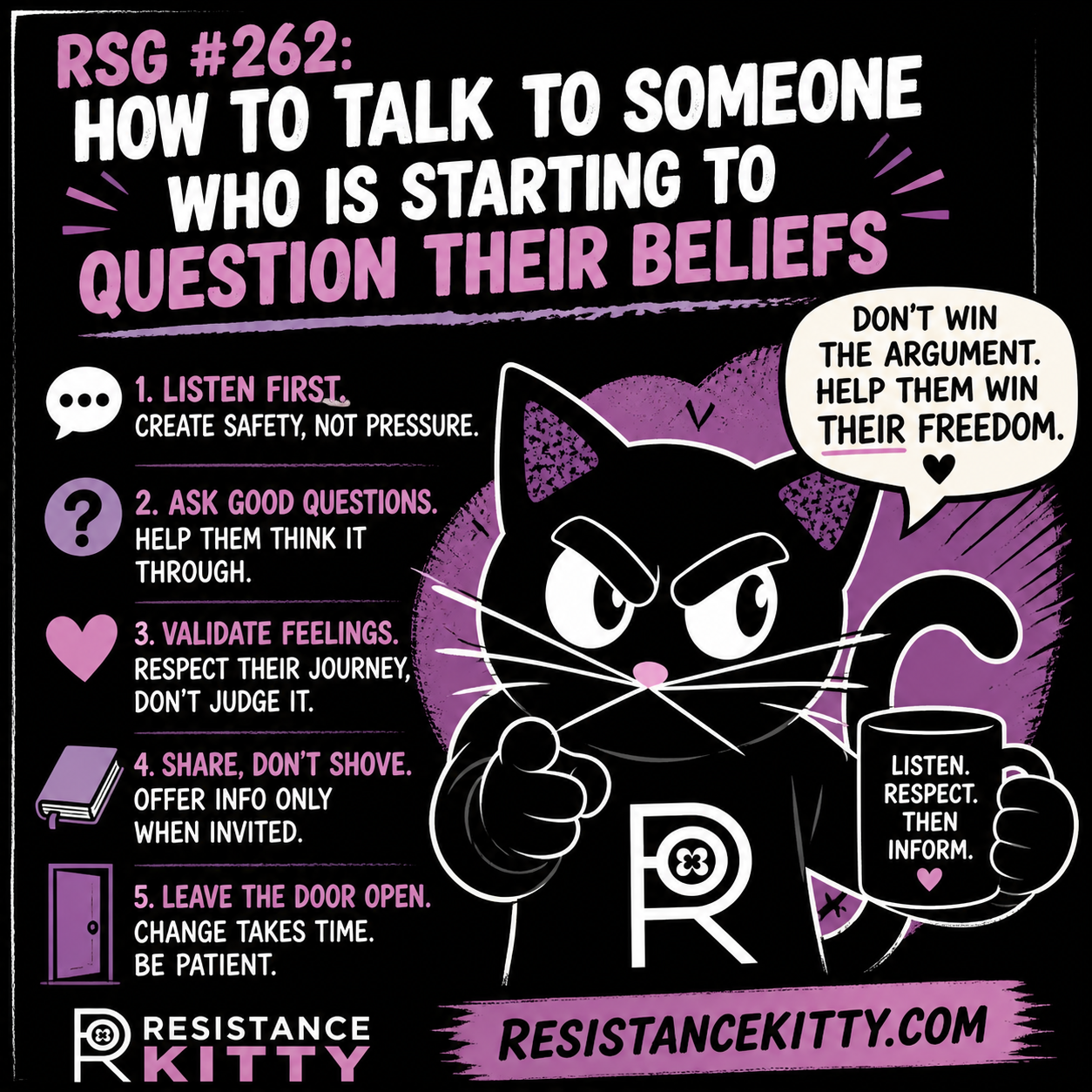
When someone begins to question their beliefs, you are looking at a rare opening. This is not the moment to dunk on them, fact dump, or prove you were right all along. That instinct feels satisfying, but it shuts people down fast. Real influence happens when people feel safe enough to think, not attacked into defending their old position.
In a media environment driven by outrage and tribal loyalty, people are trained to expect conflict. If you want to actually move someone, you have to break that pattern. This guide shows you how to do that with strategy, patience, and just enough restraint to let the other person do the thinking.
Why This Matters
Belief change does not happen through pressure. It happens through curiosity, trust, and timing. When people feel attacked, they double down. When they feel respected, they start to think.
Psychological research consistently supports this pattern. The concept of cognitive dissonance explains how people resist information that threatens their identity. Similarly, confirmation bias shows how people naturally seek information that reinforces what they already believe.
This is your window. Handle it well, and you help someone move forward. Handle it poorly, and they snap back harder than before.
What This Is
This is a structured way to guide conversations with someone who is already showing doubt. It is not about winning arguments. It is about helping them safely explore their own uncertainty without triggering defensiveness.
The core idea is simple. You are not the one changing their mind. You are creating the conditions where they can change it themselves.
Step by Step Instructions
Step 1: Recognize the Opening Without Pouncing
Pay attention to small signals. These often sound like hesitation, frustration, or contradiction. Someone might say something like “that does not make sense anymore” or “I am not sure I believe that now.” That is your cue.
Do not jump in with corrections or facts. Instead, respond with calm curiosity. A simple question like “what made you start thinking about that” keeps the door open.
This approach aligns with methods explained in Street Epistemology, which focuses on guiding people through their own reasoning rather than confronting them.
Step 2: Lower Their Defenses Immediately
If someone expects judgment, they will armor up. Your first job is to make it clear you are not there to attack them.
Use neutral language and a steady tone. Avoid phrases that signal superiority or frustration. Statements like “that is interesting” or “I have heard that before” keep things grounded.
Strong communication techniques from active listening strategies show that feeling heard reduces defensiveness and increases openness.
Step 3: Ask Questions That Make Them Think
This is where most people fail. They switch into lecture mode. Do the opposite.
Ask open ended questions that encourage reflection. Try things like “what part of that feels off to you” or “where do you think that information came from.”
Understanding how cognitive bias works helps explain why people are more persuaded by ideas they arrive at themselves rather than ones forced on them.
Step 4: Validate Without Reinforcing False Beliefs
You can validate emotions without agreeing with incorrect conclusions. This is a critical skill.
For example, if someone says they feel misled, you can respond with “it makes sense that you would feel frustrated if that information was not accurate.” You are acknowledging their experience, not confirming the belief.
This keeps the conversation moving forward without locking you into agreement.
Step 5: Offer Information Only When Invited
If you push information too early, it feels like an attack. Wait until they show curiosity or ask directly.
When you do share, keep it simple and grounded. Avoid overwhelming them. Point them toward credible sources like ProPublica or Democracy Now, and frame it as something they can explore.
Less is more here. You are planting seeds, not forcing conclusions.
Step 6: Let Them Keep Their Dignity
Nobody wants to feel stupid or tricked. If changing their belief requires them to feel humiliated, they will resist it.
Give them space to evolve without calling out past mistakes. Avoid phrases like “I told you so” or “that was obvious.” Focus on where they are now.
Maintaining dignity is what allows change to stick.
Step 7: Know When to Stop Talking
Do not push for a full transformation in one conversation.
If they start to feel overwhelmed or defensive again, step back. A simple “this is a lot to think about” keeps things respectful and leaves the door open.
Influence happens over time, not in one moment.
Example
Imagine someone says they are starting to doubt something they used to believe. Instead of jumping in with arguments, you ask what changed for them. You listen. You ask a few thoughtful questions. Eventually, they ask what you think. You share one clear source and suggest they look into it.
No argument. No pressure. Just movement they chose themselves.
Required Reading
- Street Epistemology
- Simply Psychology: Cognitive Dissonance
- Simply Psychology: Confirmation Bias
- Skills You Need: Active Listening
- Verywell Mind: Cognitive Bias Overview
Conclusion
When someone starts questioning their beliefs, you are not there to win. You are there to guide. If you stay calm, ask the right questions, and respect their autonomy, you give them something rare.
You give them space to think.
That is how minds actually change. Quietly, gradually, and without a fight.
Kitty’s Resistance Projects
- Resistance Directory:https://resistancedirectory.com/
- EpsteinWiki:Epsteinwiki.com
Support Resistance Kitty’s Work
- Kitty Merch:https://rgearshop.com/
- Support Kitty:https://buymeacoffee.com/resistancekitty