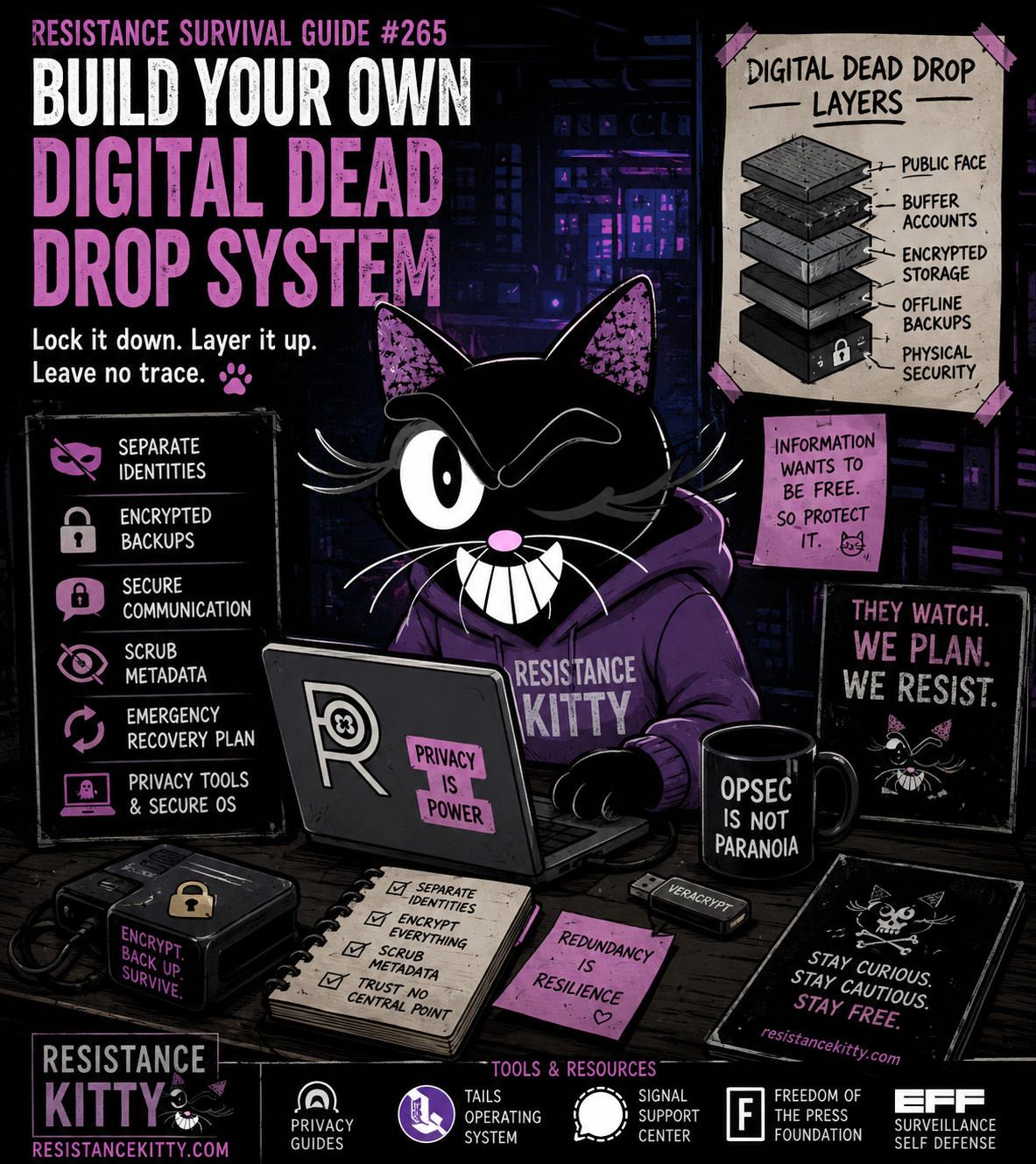
Across the United States, people are recording encounters with police, ICE, and federal agents in real time. Video has become one of the most powerful tools for accountability, but it has also become a point of danger. Recent news makes it clear that witnesses are increasingly targeted, detained, or harmed even when they are legally recording in public. This Resistance Survival Guide explains how to safely record, preserve, and protect evidence of state violence without escalating the situation or putting yourself at unnecessary risk. This is about survival, credibility, and making sure the truth lasts.
Skill Level: Advanced
Why This Guide Matters
Recording alone is not protection. Phones do not stop force, and unprepared witnesses are often treated as threats. Poorly handled footage can be seized, erased, or discredited. Strategic witnessing keeps you alive and keeps evidence usable.
Step by Step Guide
Step 1: Record Safely
Distance is safety.
- Stay as far back as possible while keeping the interaction visible.
- Avoid sudden movements or approaching officers or agents.
- Never touch anyone involved.
- Do not physically interfere, even if what you are seeing is wrong.
- If addressed by officers, you are generally not required to answer questions beyond identification where legally required.
Narration often escalates encounters. Calm silence protects credibility.
Step 2: Protect Your Footage While Filming
Your phone is evidence.
- Enable automatic cloud backups before protests or enforcement actions.
- Use a strong passcode instead of Face ID or fingerprint unlock.
- If possible, livestream or auto-upload so footage exists outside your device.
- Avoid shouting commentary that could later be framed as provocation.
For practical phone and account protection, the Electronic Frontier Foundation’s Surveillance Self-Defense guide explains how to secure devices and communications in plain language: Surveillance Self-Defense – Electronic Frontier Foundation
Step 3: Know Your Rights (and the Limits)
In public spaces, you generally have the right to record government officials performing their duties.
The ACLU’s Know Your Rights: Recording Police guide explains what is legally protected and what is not: Know Your Rights: Recording Police – ACLU
However, rights on paper do not prevent escalation. Officers may still detain or threaten witnesses. Compliance does not guarantee safety. The goal is documentation without engagement.
Step 4: After the Incident — Preserve Evidence
What you do after filming determines whether footage can be used.
- Do not edit the original video.
- Save copies in multiple secure locations.
- Write down the date, time, location, and exactly what you observed.
- Avoid speculation or interpretation.
- Share footage first with legal or civil rights organizations, not social media.
The organization WITNESS specializes in video as evidence and provides detailed guidance on preserving footage for accountability and court use:
WITNESS – Video as Evidence Resources
Step 5: Community Preparation Saves Lives
Witnessing should never be improvised.
- Use buddy systems.
- Assign designated documenters ahead of time.
- Agree on exit signals and regroup points.
- Decide in advance who handles evidence storage and follow-up.
Prepared communities reduce chaos and risk.
The National Lawyers Guild Legal Observer Program trains volunteers to document police conduct safely and effectively: National Lawyers Guild Legal Observer Program
Common Mistakes to Avoid
Rushing toward active confrontations.
Shouting insults or commentary while filming.
Livestreaming without backups.
Posting raw footage immediately without context.
Assuming “I have rights” means “I am safe.”
Survival comes first. Accountability requires witnesses who endure.
Trainings, Reading, and Resources
- The ACLU Know Your Rights trainings provide free materials and occasional live sessions on protester rights and recording law enforcement: ACLU Know Your Rights Trainings
- The Electronic Frontier Foundation offers digital security trainings and guides for activists, journalists, and witnesses: EFF Activism and Training Resources
- WITNESS offers training modules and toolkits on filming safely, ethical documentation, and preserving video for investigations: WITNESS Training and Toolkits
- Freedom for Immigrants provides community defense resources focused on documenting ICE activity while prioritizing safety and legal protections: Freedom for Immigrants – Community Defense Resources
Conclusion Paragraph
Being a witness is an act of resistance, but it must be done with preparation and discipline. Recording the truth only matters if the evidence survives and the witness does too. This moment demands strategy, not spontaneity. Stay alive. Stay credible. Stay ready. The truth depends on witnesses who can endure.