
Resistance Survival Guide #261
Skill Level: Intermediate
In a media environment designed to provoke outrage and division, many people are trapped inside information loops that reinforce fear and misinformation. If you care about protecting your community and reality itself, you cannot ignore these conversations. But going in hot with facts, sarcasm, or frustration usually backfires. People shut down, dig deeper, or escalate. This guide gives you a structured, evidence based approach that lowers defenses and creates real openings for influence without draining you.
Why This Matters
When people feel attacked, their brains shift into defense mode. At that point, logic does not land. Research highlighted by the American Psychological Association shows that perceived threats to identity cause people to double down on beliefs rather than reconsider them. That means arguing harder makes the problem worse. If you want to interrupt propaganda, you need to lower the threat level in the conversation first.
What This Is
This is a practical communication strategy built on psychology, conflict de escalation, and real world mediation techniques. It draws on approaches used in trauma informed care and motivational interviewing. Guidance from Right To Be Bystander Resources and communication research from the Greater Good Science Center show that calm, structured conversations increase the chance that someone will reflect on their beliefs over time. This is not about winning. It is about creating cracks in rigid thinking.
Step by Step Instructions
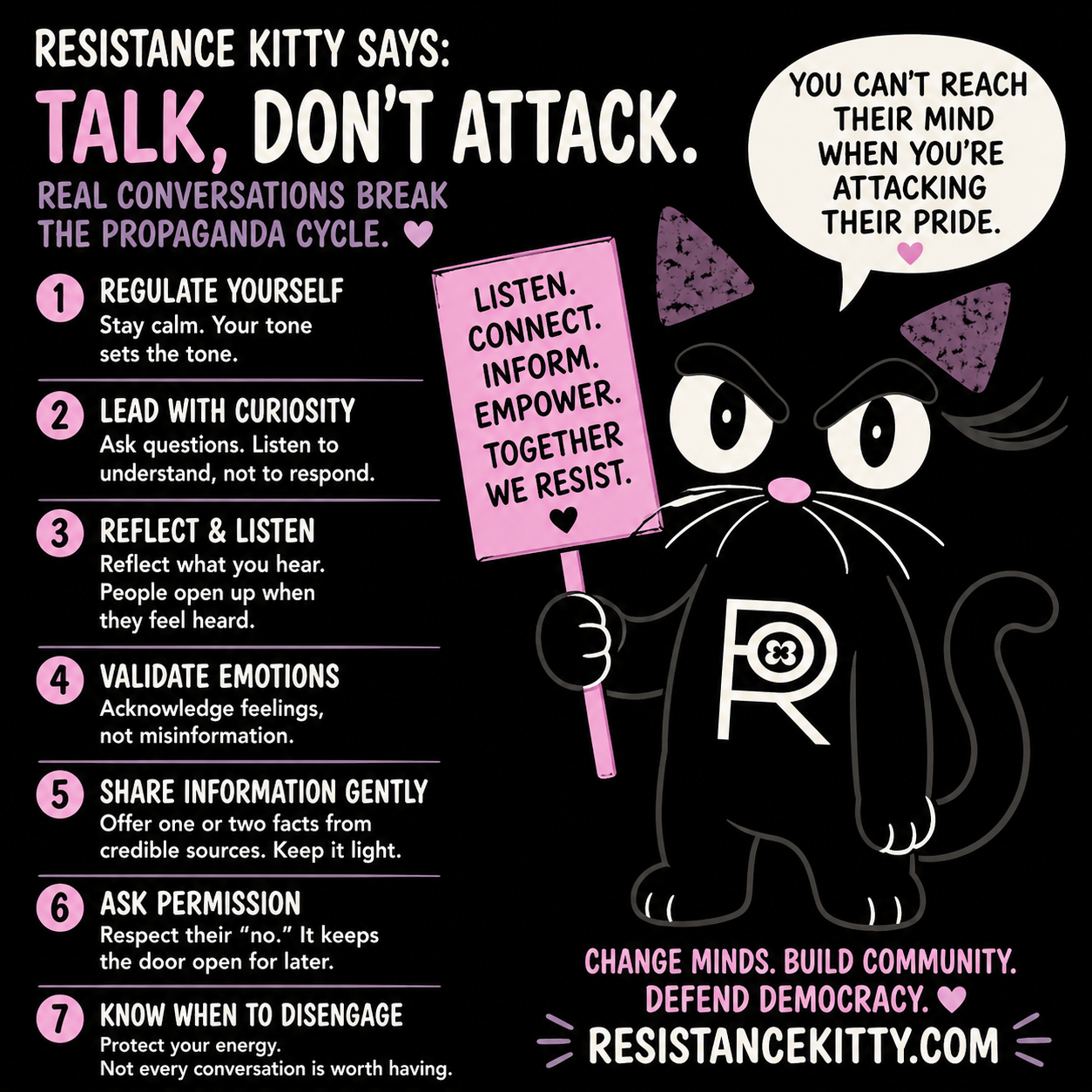
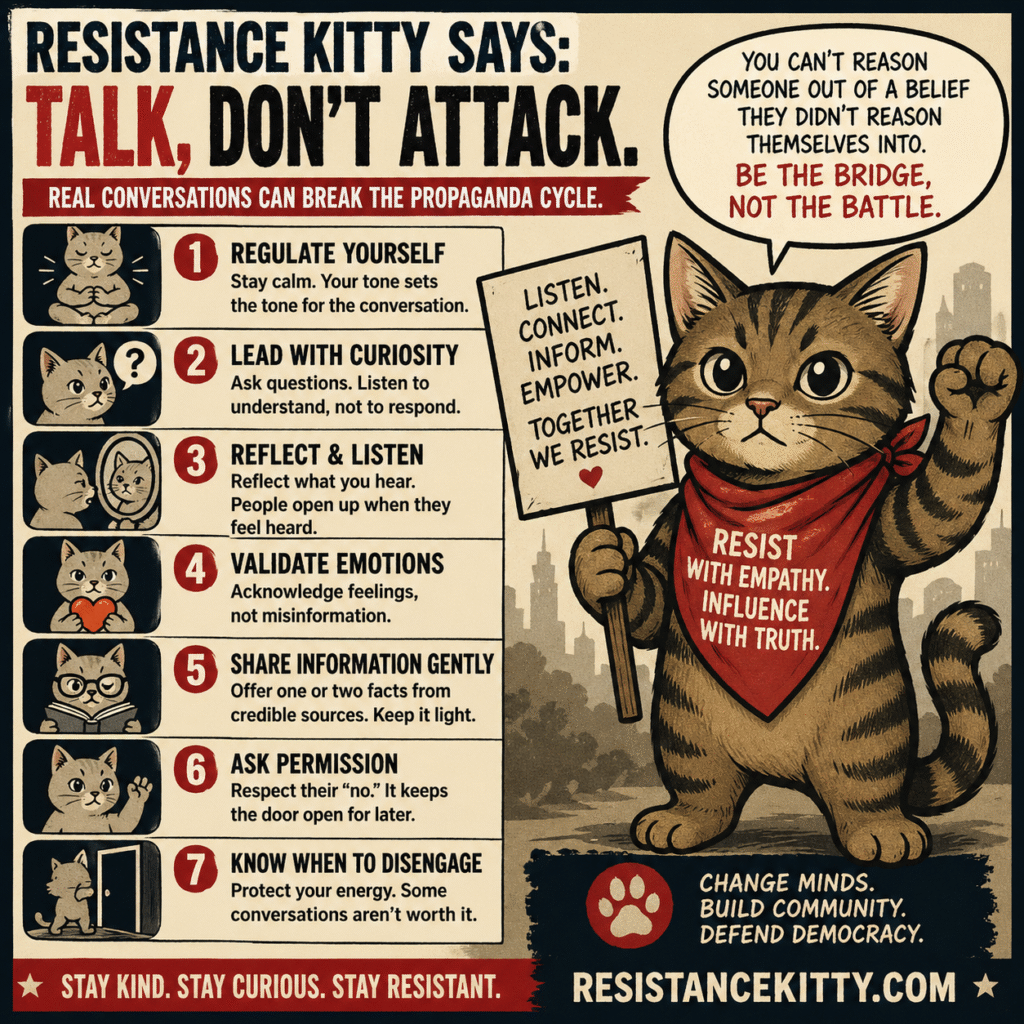
Step 1: Regulate Yourself Before You Engage
Before you respond, check your own state. If you are angry or trying to win, you will escalate things immediately. Slow your breathing and ground yourself. Simple techniques like those explained in this downloadable pdf by Therapistaid.com can help bring your nervous system back under control. When you are calm, your tone signals safety instead of threat, which keeps the conversation open.
Step 2: Start With Curiosity Instead of Correction
Do not lead with facts. Lead with questions. Ask how they came to that belief or what concerns them most. This reduces defensiveness and gives you insight into what is actually driving their thinking. The Greater Good Science Center shows that curiosity builds trust far more effectively than confrontation.
Step 3: Reflect Back What You Hear
After they speak, reflect it back in your own words without mocking or twisting it. This does not mean agreement. It shows that you are listening. When people feel heard, they are more likely to stay engaged. This technique is widely used in negotiation and mediation, including by the Harvard Program on Negotiation.
Step 4: Validate the Emotion Without Validating False Information
Separate feelings from facts. You can acknowledge that someone feels afraid, frustrated, or uncertain without agreeing with the misinformation behind it. This keeps connection intact while preventing you from reinforcing harmful narratives.
Step 5: Introduce New Information Gently
Once the conversation is stable, offer one or two pieces of information. Do not overwhelm them. Frame it as something you found interesting rather than something they must accept. Use credible independent sources such as ProPublica or Bellingcat. This reduces automatic rejection.
Step 6: Ask Permission to Go Deeper
Before continuing, ask if they are open to hearing more. This gives them a sense of control and lowers resistance. If they say no, respect that boundary. Pushing past it will shut the conversation down.
Step 7: Know When to Disengage
Not every conversation will go anywhere. If the person becomes aggressive or starts repeating talking points without engaging, step back. Protect your energy. Walking away calmly is a strategic decision, not a failure.
Example
Someone insists a harmful policy is necessary because of something they saw online. Instead of arguing, you ask what worries them most. They say safety. You reflect that concern and acknowledge it. Then you introduce one well sourced example showing harm caused by the policy without improving safety. You ask if they want to look at it together. You are not forcing change. You are opening space for it.
Required Reading
- Greater Good Science Center Guide to Conversations Across Differences
- American Psychological Association Anger Control Resources
- Right To Be Bystander Intervention Resources
- ProPublica Investigative Journalism
- Bellingcat Research Resources
Conclusion
You are not going to break propaganda by being louder or more aggressive. That is the trap. Real influence comes from reducing threat, building trust, and introducing information in a way people can actually hear. It takes patience, but it works far better than confrontation. Every calm, strategic conversation weakens the systems that depend on fear and division.
Kitty’s Resistance Projects
- Resistance Directory:https://resistancedirectory.com/
- EpsteinWiki:Epsteinwiki.com
Support Resistance Kitty’s Work
- Kitty Merch:https://rgearshop.com/
- Support Kitty:https://buymeacoffee.com/resistancekitty