

Resistance Survival Guide #240
When unrest hits, most people either freeze or overreact. Neither response keeps you safe. You do not need to turn your home into a bunker. You need to make it less appealing as a target, more difficult to access, and easier to manage under stress. That is the balance. The goal is not to fight. The goal is to avoid becoming part of the problem in the first place.
Skill Level: Beginner to Intermediate
Why This Matters
Home hardening works because most threats look for easy opportunities. A space that appears occupied, aware, and slightly harder to approach often gets skipped. That is your advantage. Small, intentional changes create friction. Friction buys you time. Time keeps you safe.
During civil unrest, homes are rarely targeted at random. They are chosen because they look exposed, predictable, or easy. A home that shows signs of awareness and preparation is far less attractive than one that looks passive. You are not eliminating risk. You are reducing your chances of being selected.
What This Is
Home hardening is the process of improving your space through visibility control, access control, and basic safety planning. It focuses on prevention, not confrontation. You are shaping your environment so that it discourages attention, slows down entry, and gives you time to respond or leave if needed. This is not about extreme measures. It is about practical adjustments that make a real difference without disrupting your daily life.
Step by Step Instructions
Step 1: Control Visibility From the Outside
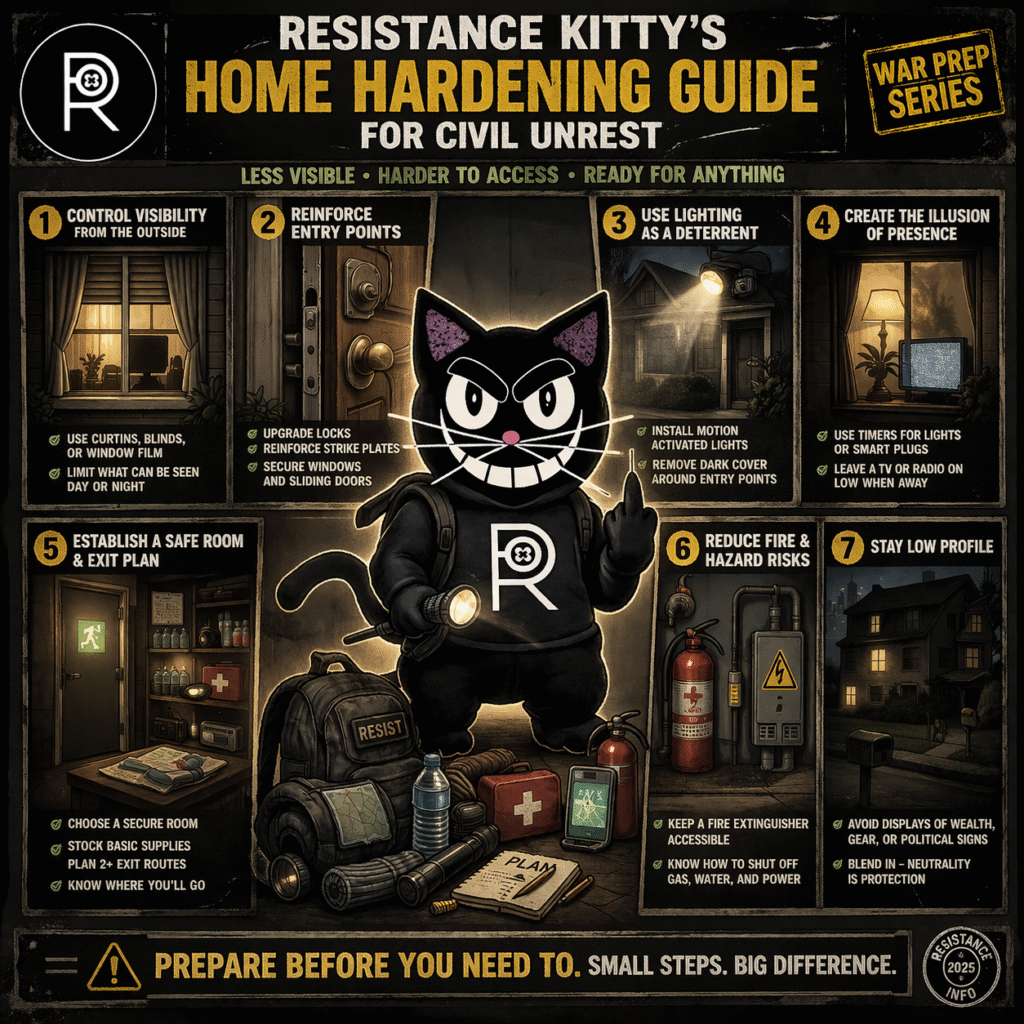
Start by stepping outside and looking at your home the way a stranger would. If you can clearly see valuables, electronics, or movement inside, you are giving away too much information. Use curtains, blinds, or 3M window film to reduce visibility while still allowing light in. This helps obscure interior views without making your space feel closed off.
At night, visibility becomes even more important. Bright indoor lighting with open windows turns your home into a display case. Close your curtains before dark and create just enough uncertainty that no one can quickly assess what is inside.
Step 2: Reinforce Entry Points Without Overdoing It
Doors and windows are where most break ins happen because they are fast and familiar access points. You do not need extreme upgrades to improve security. Reinforcing your door with longer screws in the strike plate or upgrading to a stronger lock system from Schlage makes forced entry slower and louder.
For sliding doors or windows, placing a simple physical barrier like a dowel or security bar prevents quick access. You are not trying to make your home impenetrable. You are making it inconvenient and noisy to access, which is often enough to stop an attempt.
Step 3: Use Lighting as a Deterrent
Lighting is one of the simplest and most effective deterrents available. Darkness provides cover, while light removes it. Motion activated lighting around entry points creates sudden visibility that disrupts anyone approaching. Systems from Ring are easy to install and require minimal setup.
The goal is not constant brightness. It is the sudden shift from dark to visible that creates hesitation and discourages movement toward your home.
Step 4: Create the Illusion of Presence
An empty or predictable home is an easy target. Even when you are home, your space should not appear static. Use timers or smart controls through Google Home to vary lighting patterns so they feel natural.
Adding a low volume TV or radio can also create the impression that someone is present and alert. These small signals influence perception. A home that feels occupied is less likely to be approached.
Step 5: Establish a Safe Room and Exit Plan
You need options. Choose one room in your home that can be secured quickly if needed. This becomes your safe room. Keep basic supplies there such as water, a flashlight, a backup phone charger, and a simple first aid kit.
At the same time, identify at least two exit routes from your home and decide where you will go if you need to leave. Planning resources from Ready.gov can help you build a realistic evacuation plan. Having both a shelter option and an exit strategy gives you flexibility when conditions change.
Step 6: Reduce Fire and Hazard Risks
Civil unrest often brings secondary risks such as fire, debris, or utility disruption. Move flammable materials away from entry points and keep a fire extinguisher accessible. Learn how to use it properly through guidance from the National Fire Protection Association.
You should also know how to shut off gas or electricity if needed. These steps are simple, but they prevent small problems from becoming major emergencies.
Step 7: Stay Low Profile
One of the most effective strategies is also the simplest. Avoid drawing attention to your home. Do not display valuables, expensive equipment, or anything that signals conflict during unstable periods. Blending in reduces risk. Neutrality is protection.
Example
Imagine two homes during a period of unrest. One is fully visible, quiet, and easy to assess. The other has controlled visibility, reinforced entry points, motion lighting, and subtle signs of activity. Most threats will choose the easier option because risk usually follows the path of least resistance. Your goal is to make sure your home does not look like the simplest choice on the block.
Required Reading
Conclusion
You do not need extreme measures to make your home safer. You need thoughtful ones. Home hardening is really about creating time, reducing vulnerability, and making your environment less attractive to anyone looking for an easy opportunity. It is a practical form of preparation, not panic. When you control visibility, reinforce access points, plan for emergencies, and stay low profile, you shift the odds in your favor. That matters. The best time to do this work is before you ever need it, because once a crisis starts, your options shrink fast. A few steady improvements made now can make your home calmer, safer, and easier to manage when everything outside feels unstable.
Kitty’s Resistance Projects
- Resistance Directory: https://resistancedirectory.com/
- EpsteinWiki: Epsteinwiki.com
Support Resistance Kitty’s Work
- Kitty Merch: https://rgearshop.com/
- Support Kitty: https://buymeacoffee.com/resistancekitty


