
Resistance Survival Guide #274
Skill Level: Advanced
Large demonstrations can become medically chaotic very quickly. Heat exhaustion, panic attacks, dehydration, pepper spray exposure, rubber projectile injuries, crowd crushes, asthma attacks, and traumatic wounds can overwhelm both organizers and emergency systems within minutes. In politically unstable environments, protesters also face the added danger of delayed EMS access, communication breakdowns, and aggressive crowd control tactics that increase injuries.
Emergency medical preparedness is no longer something reserved for professional street medics. Every organizer, volunteer, journalist, legal observer, and community responder should understand the basics of protest medicine, emergency coordination, and mutual aid medical planning. The goal is not to create fear. The goal is to reduce preventable harm and help communities stay calm, organized, and capable during stressful situations.
Why This Matters
Modern protest environments are unpredictable. Demonstrations that begin peacefully can rapidly shift due to weather, panic, counter protesters, aggressive policing, vehicle incidents, or crowd compression. Even nonviolent events can produce serious medical emergencies simply because of heat, exhaustion, dehydration, and emotional overload.
Medical preparedness saves lives because organized communities respond faster. People who understand basic field medicine are more likely to recognize dangerous symptoms early, communicate effectively with emergency responders, and avoid worsening injuries through panic or misinformation.
Preparedness also protects vulnerable individuals including elderly participants, disabled protesters, transgender attendees, immunocompromised individuals, and people with chronic illnesses who may not tolerate environmental stressors as easily.
What This Is
Emergency protest medicine combines first aid, crowd safety planning, communication systems, and decentralized mutual aid support. It focuses on stabilizing injuries, protecting vulnerable people, coordinating evacuation pathways, and preserving accurate information during chaotic conditions.
Street medic culture has existed for decades within labor movements, civil rights organizing, disaster response networks, and protest communities. Modern protest medicine now includes digital coordination systems, encrypted communication channels, rapid location sharing, legal observation support, and trauma informed psychological first aid.
This guide focuses on preparation, stabilization, communication, and harm reduction.
Step by Step Guide
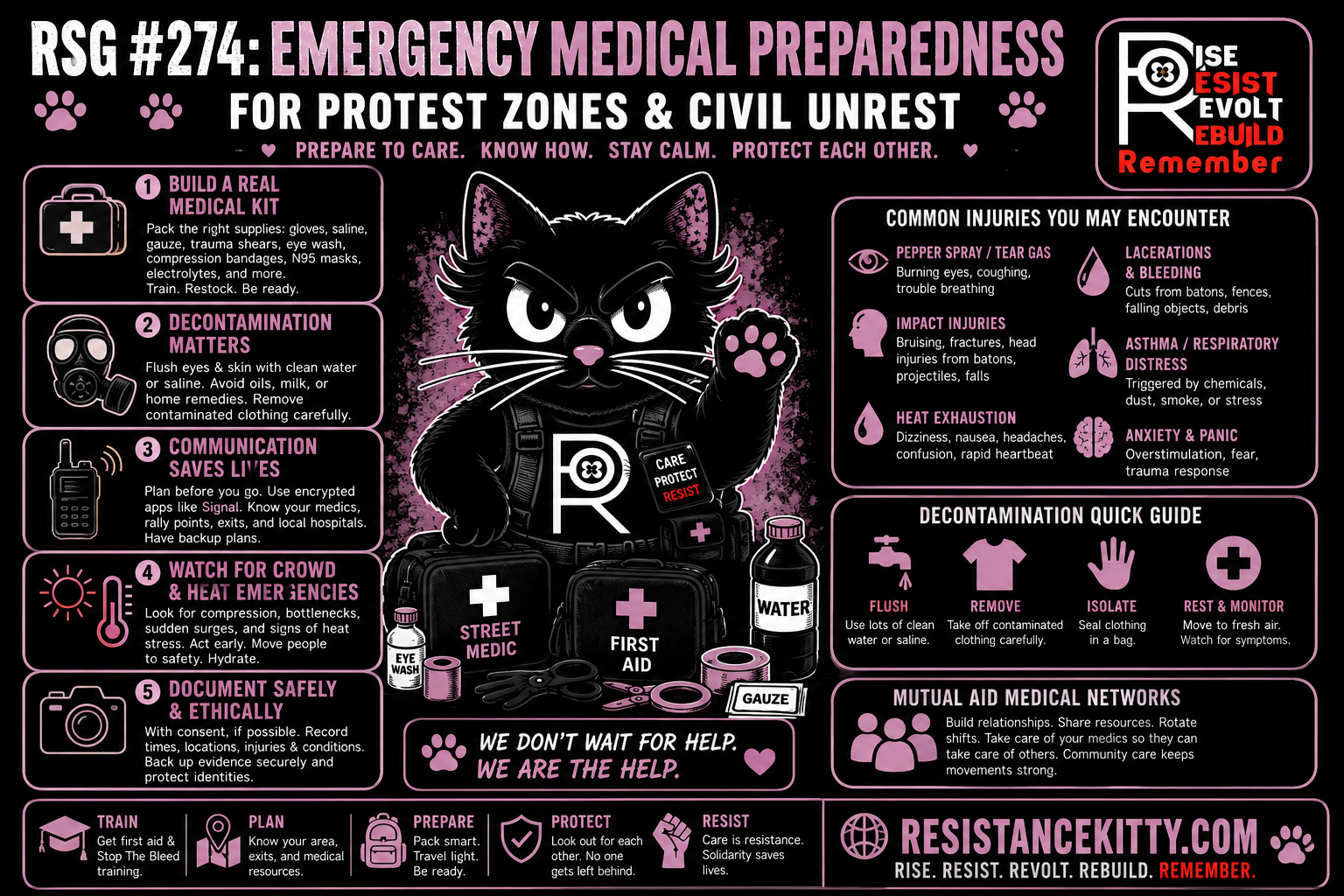
Step 1: Build A Real Protest Medical Kit Before You Need It
Most people bring far too little medical equipment to large events. A few adhesive bandages and a water bottle are not enough for a serious crowd emergency. A proper protest medical kit should focus on stabilization, contamination response, hydration, visibility, and mobility.
Start with nitrile gloves, saline solution, sterile gauze, electrolyte packets, trauma shears, cold packs, eye wash solution, compression bandages, burn gel, CPR masks, medical tape, and high quality N95 masks. Carry extra water specifically reserved for medical use rather than drinking.
Portable tourniquets can save lives during severe bleeding emergencies, but they should only be used after proper training. Organizations like Stop The Bleed provide accessible public education on traumatic bleeding response. Community members who regularly attend demonstrations should strongly consider formal first aid and bleeding control training.
Medical kits should remain lightweight and organized. During emergencies, people lose fine motor coordination due to stress. Label equipment clearly and store items in consistent locations so supplies can be located quickly.
Step 2: Understand Decontamination Procedures For Chemical Irritants
Pepper spray and tear gas exposure can trigger panic, respiratory distress, skin irritation, disorientation, and dangerous crowd movement. One of the most important skills during civil unrest is understanding proper decontamination procedures without spreading misinformation.
Medical experts and street medic organizations generally recommend flushing affected eyes and skin with large amounts of clean water or sterile saline. Avoid random internet remedies that lack medical support. Oils, milk, toothpaste, and homemade chemical mixtures can worsen irritation or introduce contamination.
Encourage exposed individuals to remain calm, blink frequently, breathe slowly, and avoid rubbing their eyes. Remove contaminated clothing carefully and isolate it inside sealed bags when possible. People with asthma or respiratory conditions may require rapid evacuation from contaminated areas.
The International Network Of Civil Liberties Organizations and independent medic collectives have published extensive crowd safety guidance that organizers should review before major demonstrations.
Step 3: Create Medical Communication Plans Before Events Begin
One of the biggest failures during emergencies is communication collapse. Protest organizers should establish medical coordination systems before demonstrations begin rather than improvising during chaos.
Assign designated medical volunteers and make sure marshals, legal observers, and organizers know how to contact them. Use encrypted communication platforms such as Signal for sensitive coordination. Identify rally points, exit routes, cooling stations, and nearby hospitals before crowds gather.
Medical teams should also establish plain language emergency signals. Confusing codes create delays during panic situations. Clear communication like “medical needed north entrance” works better than vague shorthand.
If possible, establish backup communication plans in case cellular service becomes overloaded or unavailable. Offline map applications and battery backups become extremely important during prolonged events.
Step 4: Learn How To Recognize Crowd Crush And Heat Emergencies
Crowd crush incidents are among the deadliest protest related dangers because they develop rapidly and silently. People often imagine trampling scenes from movies, but real crowd compression emergencies usually involve slow pressure buildup that prevents breathing.
Warning signs include tightly packed movement, inability to raise arms, sudden surging, screaming near bottlenecks, and people appearing unable to move independently. Organizers should constantly monitor entrances, fences, stairwells, narrow corridors, and police barricade zones.
Heat emergencies are also increasingly common during large gatherings. Heat exhaustion can escalate into heat stroke rapidly, especially in humid environments like Florida. Symptoms include confusion, dizziness, nausea, weakness, headache, rapid pulse, and altered behavior.
The National Integrated Heat Health Information System provides excellent public safety guidance on heat preparedness and emergency response planning.
Step 5: Document Injuries Safely And Ethically
Documentation matters because injuries often become evidence in legal proceedings, civil rights complaints, insurance claims, or human rights investigations. However, documentation must be handled ethically and safely.
Photograph injuries only with informed consent whenever possible. Avoid exposing faces unnecessarily, especially for vulnerable protesters. Record times, locations, visible injuries, environmental conditions, and witness information carefully.
Immediately back up important evidence to secure encrypted storage systems. Metadata preservation can become important later during investigations. Organizations such as the Electronic Frontier Foundation provide strong digital security guidance for activists and journalists documenting protests.
Never interfere with emergency medical care to obtain footage or photographs. Medical stabilization always comes first.
Step 6: Build Community Mutual Aid Medical Networks
The strongest protest medical systems exist long before demonstrations begin. Communities should develop relationships with nurses, therapists, EMTs, physicians, pharmacists, disability advocates, interpreters, and trauma informed volunteers who can coordinate support during emergencies.
Mutual aid medical networks often provide transportation, hydration stations, medication storage, wellness checks, post protest decompression spaces, and psychological first aid. Emotional stabilization matters just as much as physical injury treatment during high stress events.
Community preparedness also reduces burnout among volunteer medics who are often overwhelmed during prolonged political crises. Sustainable systems require rotating responsibilities, rest periods, supply sharing, and emotional support.
Organizations such as Mutual Aid Disaster Relief provide valuable examples of decentralized community care systems during disasters and civil emergencies.
Example
Imagine a large rally during extreme summer heat where several attendees begin experiencing dizziness and breathing difficulties near a crowded barricade line. A prepared medical team immediately identifies the early signs of heat stress and crowd compression. Volunteers establish a safer movement corridor, distribute electrolyte fluids, communicate with marshals through encrypted messaging, and guide vulnerable individuals toward shaded recovery areas before conditions worsen.
Because the organizers planned ahead, panic is minimized, emergency services receive accurate information, and multiple injuries are prevented before the situation escalates into a mass casualty event.
Required Reading
- Stop The Bleed
- Electronic Frontier Foundation Surveillance Self Defense
- Mutual Aid Disaster Relief
- Heat.gov Emergency Heat Preparedness
- Signal Secure Communication App
- International Network Of Civil Liberties Organizations
Conclusion
Prepared communities are harder to intimidate. Medical preparedness is not about expecting violence everywhere. It is about understanding that large public gatherings create real physical and emotional risks that responsible organizers should take seriously.
Authoritarian systems often depend on fear, chaos, and exhaustion. Calm preparation weakens that strategy. Communities that know how to care for each other during emergencies become more resilient, more confident, and far more capable of sustaining long term movements for justice and accountability.
Kitty’s Resistance Projects
- Resistance Directory:https://resistancedirectory.com/
- EpsteinWiki:Epsteinwiki.com
Support Resistance Kitty’s Work
- Kitty Merch:https://rgearshop.com/
- Support Kitty:https://buymeacoffee.com/resistancekitty